
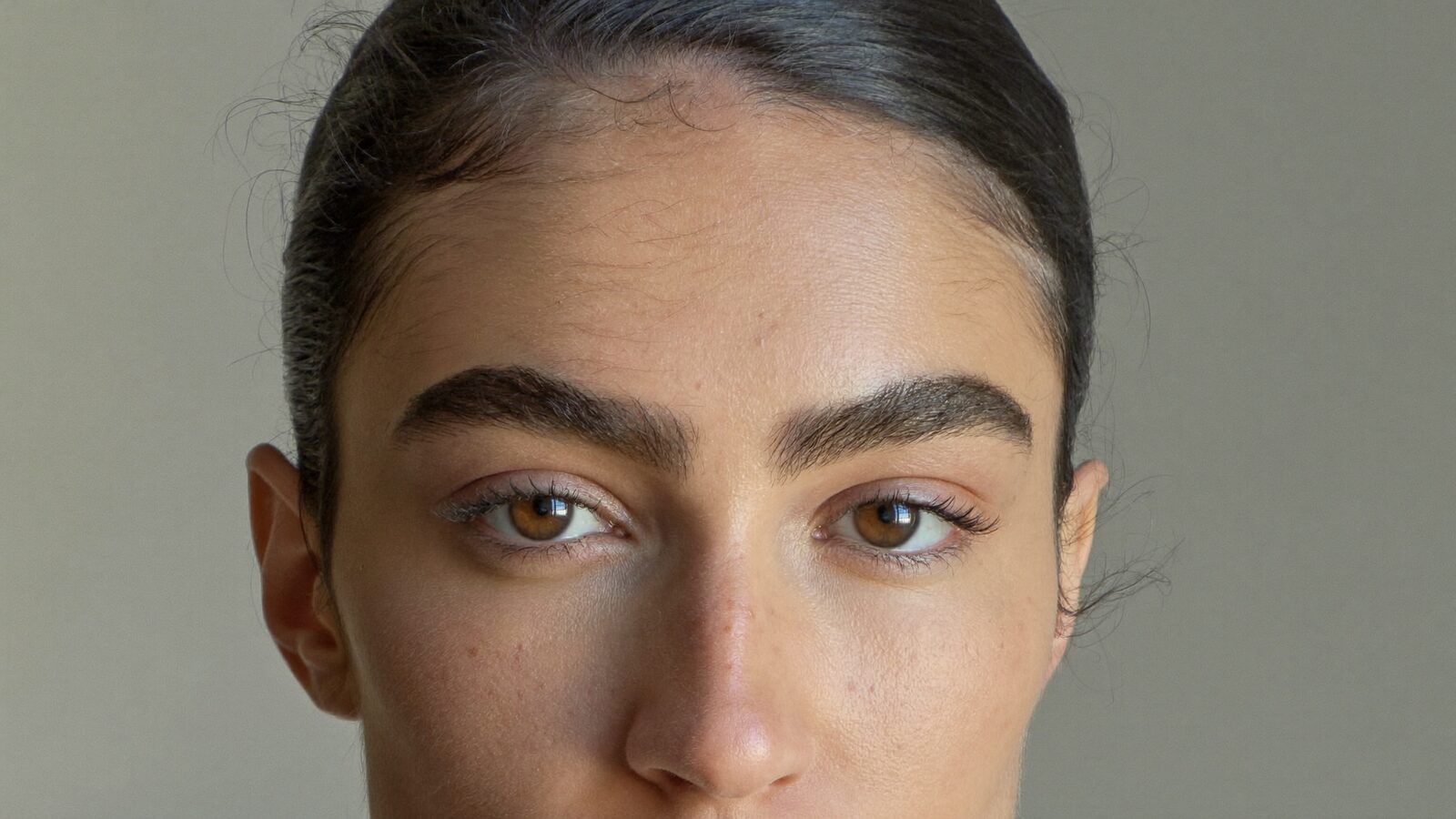
An eyebrow transplant moves individual hair follicles, usually from the back of the scalp, into thin or missing brows so they grow real, permanent hair. This eyebrow transplant guide covers who it helps, how the shape is designed, why graft angle matters so much, and the one trade-off every patient should know: transplanted brow hair grows like scalp hair and needs regular trimming.
Most brow procedures use a few hundred single-hair grafts per side and take a few hours under local anesthesia, with patients going home the same day. If you already know you want to explore the procedure, our eyebrow transplant page explains how it is planned and priced at our West Loop clinic.
Key takeaways
- An eyebrow transplant uses follicles from the scalp, most often from behind the ears or the lower back of the head, where hairs tend to be finer.
- A typical brow needs roughly 150 to 350 grafts per side, almost all of them single-hair grafts for a soft, natural look.
- Brow hairs lie very flat and change direction across the brow, so each graft has to be placed at a shallow angle in the right direction.
- Transplanted hairs keep the growth cycle of scalp hair, so most patients trim their brows every week or two for life.
- New brow hairs usually start growing around three to four months after the procedure, with the final look at about 8 to 12 months.
What is an eyebrow transplant?
An eyebrow transplant is a minor surgical procedure that moves hair follicles from a donor area, usually the scalp, into the eyebrows to rebuild thickness or shape. Because the follicles are living hair roots, the result grows real hair permanently, unlike makeup, tinting or microblading, which only color the skin.
Most brow transplants use FUE, or follicular unit extraction, where grafts are removed one at a time with a tiny round punch. At our clinic, grafts are extracted by hand with fine handheld FUE instruments by our in-house team of licensed technicians. Some plans place the grafts with an implanter pen, a DHI-style tool that loads a graft and inserts it in one motion. FUT, where a thin strip of scalp is removed and divided under magnification, is also offered and is occasionally discussed for larger cases.
The procedure is done under local anesthesia, so you are awake and the brows and donor area are numb. There is no general anesthesia, and you go home the same day.
Who eyebrow transplants help
Eyebrow transplants help people whose brow follicles are gone or permanently damaged: from years of over-plucking or waxing, from scars after injuries or burns, from earlier surgery, or from naturally sparse or patchy brows. Good candidates have stable brow loss, healthy skin around the brows and enough donor hair on the scalp.
The people we see most often fall into a few groups:
- Over-plucked brows: Years of tweezing, threading or waxing, especially in the thin-brow trends of past decades, can leave follicles that no longer regrow.
- Scars and injuries: A gap from a childhood fall, a cut, a burn or a past surgery can often be filled, as long as the scar tissue has a reasonable blood supply.
- Naturally sparse brows: Some people never had full brows and want more shape or density through the head or tail.
- Microblading fatigue: Patients tired of repeated touch-ups, or unhappy with faded or shifted color, sometimes want real hair instead.
- Men wanting fuller brows: A heavier brow is often requested to balance the face, sometimes alongside a beard or hairline procedure.
Some causes need care first. Thyroid problems can thin the outer third of the brows, and alopecia areata, an autoimmune condition, can cause patchy loss. These should be treated and stable before a transplant is considered. Repeated hair pulling, known as trichotillomania, also needs to be managed beforehand.
How is the eyebrow shape designed?
The eyebrow shape is designed by drawing the brows on your face before any grafts are placed, using your bone structure, eye shape and existing hairs as guides. Dr. Otto Placik reviews the design with you, and nothing proceeds until you are happy with how the drawn brows look in the mirror.
A few common landmarks guide the drawing. The head of the brow, the inner end, usually lines up roughly with the side of the nose. The arch, the highest point, often sits above the outer part of the iris when you look straight ahead. The tail tends to end on a line running from the side of the nose past the outer corner of the eye.
These are starting points, not rules. Men's brows are often flatter and fuller with a lower arch, while many women prefer a gentle arch and a tapered tail. Older patients usually look more natural with a softer, less sculpted shape. Bring photos of brows you like, but expect the design to be adjusted to your own face, much as a scalp hairline is, an idea our guide to hairline design and face shape explores.
Design tip: Start a little conservative. A brow can be made fuller later with a small touch-up, but grafts placed outside the right shape are much harder to remove.
Graft angle and direction
Graft angle and direction decide whether a transplanted brow looks real. Natural brow hairs lie almost flat against the skin and point in different directions across the brow, so every graft is placed at a very shallow angle and turned to match the hairs around it. Grafts placed too steeply stick out and look obvious.
Brow direction changes as you move across the face:
- Head: At the inner end, hairs grow mostly upward and slightly outward.
- Body: Through the middle, upper hairs angle slightly down and outward while lower hairs angle slightly up and outward, so they meet in a soft criss-cross pattern.
- Tail: Toward the outer end, hairs run almost horizontally toward the temple.
The recipient sites, the tiny openings that hold each graft, are made with very fine needles or blades so the angle is set exactly. Single-hair grafts are used almost everywhere. Finer hairs, often taken from behind the ears or the nape of the neck, help the new brow blend with any brow hair you still have.
This attention to angle is also why brow work is slower per graft than scalp work. A typical brow session runs about two to five hours depending on the number of grafts, including design time.
What happens after an eyebrow transplant?
After an eyebrow transplant, small crusts form around each graft and usually fall away within about a week. Mild swelling around the eyes can appear for a few days. Most transplanted hairs then shed in the first few weeks, which is normal, and new growth typically begins around three to four months later.
| Time after surgery | What is typical |
| Days 1 to 7 | Tiny crusts, mild redness, possible swelling around the eyes; keep the brows dry and untouched as instructed |
| Weeks 2 to 6 | Most transplanted hairs shed while the roots stay in place |
| Months 3 to 4 | New fine hairs begin to appear |
| Months 6 to 8 | Brows thicken noticeably and trimming usually starts |
| Months 8 to 12 | Close to the final result |
Most people return to desk work within a few days. Brow makeup, heavy sweating and strenuous exercise are usually paused for about a week, or as advised at your aftercare visit. In a Chicago summer, a wide-brimmed hat helps keep strong sun off the healing brows, and in winter a loose hat or hood helps against cold wind without rubbing the area.
Trimming transplanted brow hair
Trimming transplanted brow hair is a lifelong routine for most patients, usually every week or two. Scalp follicles keep their own long growth phase after they move, so transplanted brow hairs keep growing past normal brow length. Regular trimming keeps them neat and blending with your natural brow hairs.
Natural brow hairs have a short growth phase, which is why brows stop at a certain length. Scalp hair can grow for years. When a scalp follicle is moved into the brow, it does not learn to stop, so it needs trimming instead. Some patients also notice that transplanted hairs need a little brow gel to lie flat, especially in the first year.
- Tools: Small curved brow scissors and a spoolie brush are enough for most people.
- Method: Brush the hairs upward, trim the tips that extend past the top line of the brow, then brush down and repeat.
- Frequency: Weekly in the first months of full growth, then whatever keeps the shape you like.
- Help: A brow technician or barber can tidy the shape, but tell them which hairs are transplanted so they do not pluck them.
Eyebrows vs beards: what differs
Eyebrow and beard transplants use the same basic method, moving scalp follicles into facial hair areas, but they differ in scale, angle and upkeep. A brow needs a few hundred delicate single-hair grafts placed almost flat, while a beard area often needs a thousand or more grafts, sometimes with two-hair grafts for density.
| Factor | Eyebrow transplant | Beard transplant |
| Typical graft count | Roughly 150 to 350 per brow | Often 1,000 to 3,000 or more, depending on the area |
| Graft type | Almost all single-hair grafts | Mostly single-hair, some two-hair grafts in denser zones |
| Placement angle | Very flat, direction changes across the brow | Shallow, following the downward and outward beard flow |
| Typical session | About 2 to 5 hours | Often most of a day for larger areas |
| Ongoing care | Trimming every week or two | Shaved or trimmed like the rest of the beard |
The trimming point is the big practical difference. A beard is trimmed or shaved anyway, so long-growing transplanted hairs fit an existing habit. Brows are expected to stay short on their own, so the routine is new. Read more in our guide to what to expect from a beard transplant, or see the beard transplant service for planning details. Our results gallery shows examples of facial hair and scalp work.
Both procedures draw on the same donor supply as any future scalp work. If you think you may want a hairline procedure later, mention it at the consultation so the plan protects enough donor grafts for both.
Plan Your Brows With Us
Book a free assessment at our West Loop clinic. We will draw your brow shape with you, check your donor hair and give you a written plan and quote.